Many buyers will not request a quote until the ESG picture is clear. So here it is, including the parts that are still in progress.
No cacao in our network is planted on land cleared after the EUDR cut-off. Plot polygons make this checkable rather than assertable — you can run our geometry against your own forest-cover data.
A zero-tolerance policy with scheduled, unannounced field inspection across the network. Children are not present in our production chain. Where a partner plot fails, the remedy is remediation with the household and re-inspection, not quiet delisting.
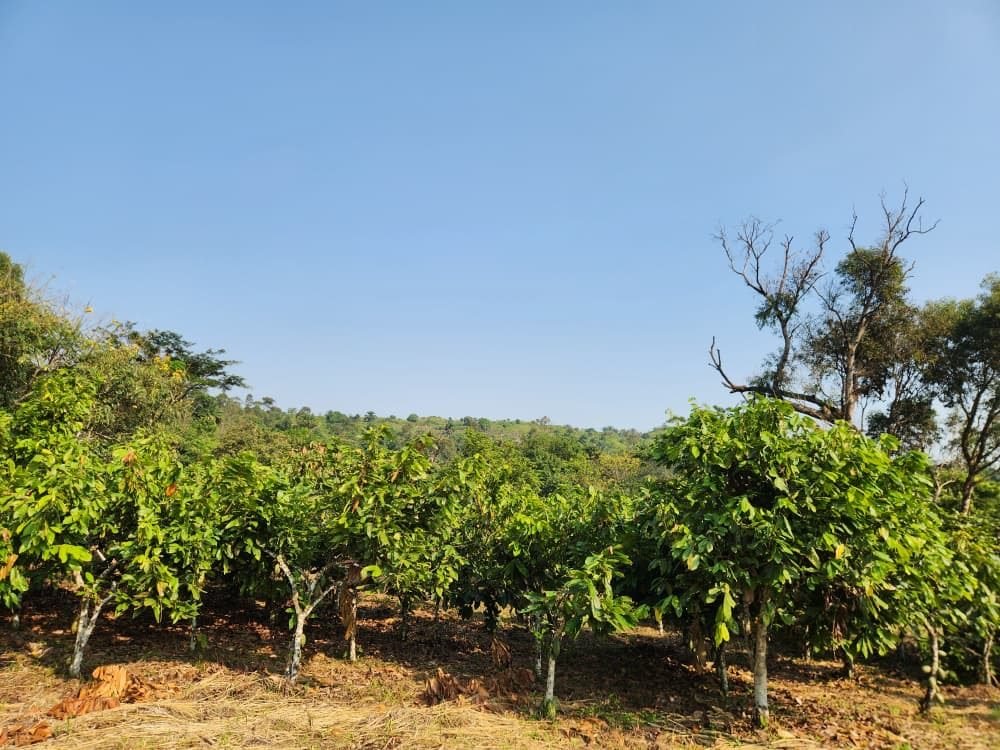
Agroecological practice: managed shade, organic matter return, biological pest control and prohibited-pesticide exclusion, with input records kept at plot level.
We buy directly, which removes the intermediary margin that normally sits between a grower in Beni territory and an exporter. Prices paid at collection are recorded per lot and disclosed to contracted buyers on request.
Women do much of the fermentation, sorting and drying work in this region and have historically been paid least for it. We record women's participation across the network and are working to raise both the count and the roles.
Field teams run pruning, harvest-timing, post-harvest handling and disease-management training with partner households on a recurring cycle rather than one-off events.
Nursery and replanting programme to renew ageing stock and extend shade cover, because yield decline is what pushes farmers to clear new land in the first place.
A share of margin is committed to local infrastructure priorities set with the communities we source from, rather than chosen from Boston.
ESG claims that cannot be evidenced are worse than no claims, because your auditor will find the gap. Our current position, stated plainly:
| Area | Status | Evidence available |
|---|---|---|
| Plot geolocation | In place | Polygon dataset for the full network, released with shipping documents |
| Child labour policy | In place | Written policy, inspection schedule and inspection records |
| Deforestation cut-off | In place | Plot geometry for independent verification |
| Prohibited pesticide exclusion | In place | Plot-level input records |
| Organic certification | In progress | Certification status published on the Resources page |
| Rainforest Alliance / Fairtrade | Not held | Not currently certified — we will say so rather than imply otherwise |
| Third-party social audit | Open to it | We will host and cooperate with buyer-appointed auditors |
| Living income benchmarking | In development | Collection prices recorded per lot; benchmarking methodology being defined |
It would be dishonest to publish a sustainability page about North Kivu without acknowledging the region's security situation. Eastern DR Congo has lived through decades of instability, and any buyer doing serious due diligence knows it. What we can tell you is how we operate within it: we work through established community relationships in the territories we source from, we move goods on the Beni–Kasindi corridor with bonded transport and experienced handlers, and we do not source from areas where we cannot verify conditions on the ground ourselves.
The commercial argument for buying here is also the developmental one. Cocoa is one of the few legal, high-value, smallholder-accessible export crops in the region. Direct trade at a fair collection price does more durable good than most aid instruments — and it only works if the beans meet an international quality standard, which is why the quality protocol and the ESG position are the same project.
Tell us your target profile, volume and destination port. Our export desk replies within two business days with available lots, a cut-test report and an indicative offer.